
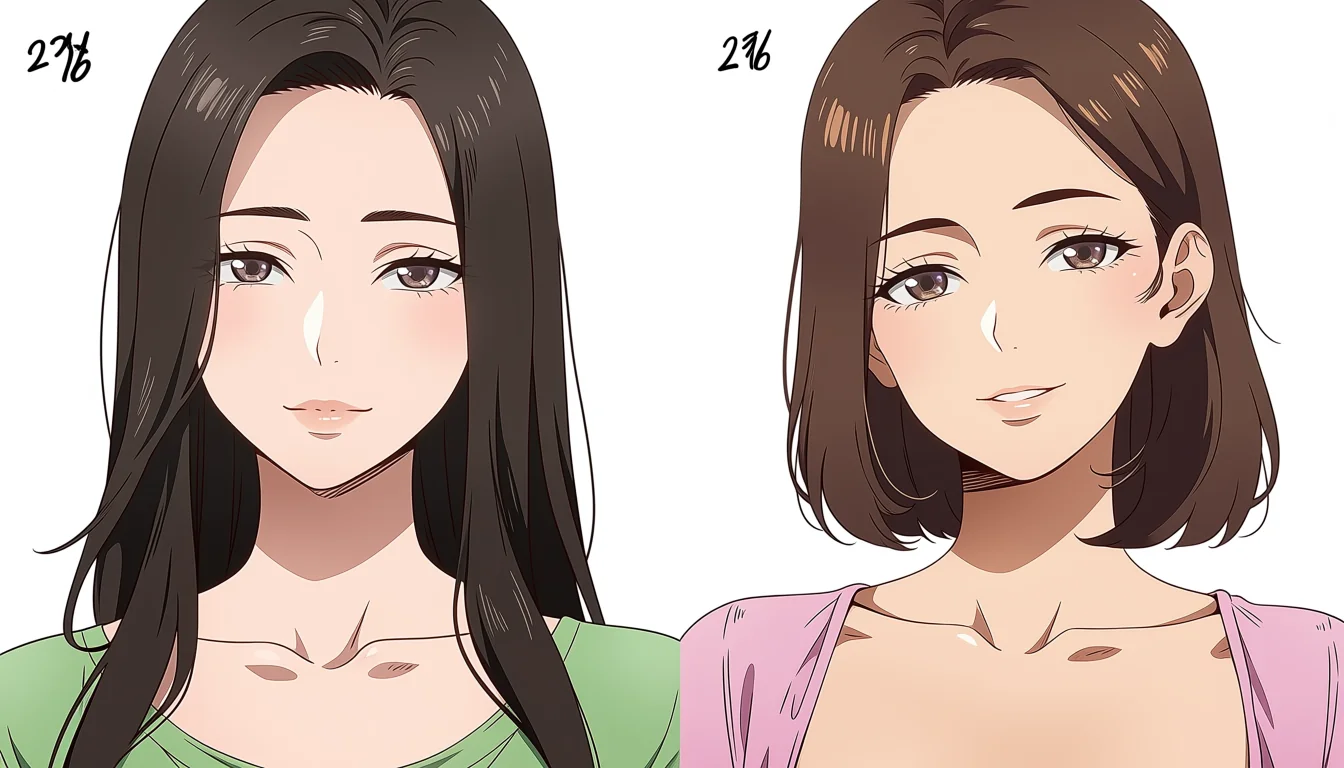
A large share of amateur figure work goes wrong in the same place and for the same reason: soft tissue is drawn as though it were a rigid attached object rather than a mass that responds to the body underneath it and to which direction is down. The correction is structural rather than stylistic, and it improves work at any level of realism or abstraction.
This is worth treating as a craft problem rather than as a matter of taste, because the fix transfers. Once an artist thinks in terms of underlying structure and load, the same reasoning applies to arms folded across a chest, weight sitting on a hip, and every other place where a soft form meets a hard one.
Start with the rib cage
The chest is not a flat plane. It is a barrel that tapers, tilts with the spine, and rotates independently of the pelvis. Anything attached to it inherits that geometry, so a form drawn onto a flat rectangle will read as stuck on regardless of how carefully it is rendered afterwards. Draw the barrel first, even as a rough shape.
Attachment matters as much as the barrel. Soft tissue sits on the chest wall across a broad area and angles outward slightly, following the curve of the ribs rather than pointing straight forward. Drawing two identical forms aimed at the viewer is the single most recognisable shorthand error, and it survives even in otherwise skilled work.
Gravity has a direction
Down changes depending on the pose. Standing, lying on the back, leaning forward, and lying on the side each produce completely different distributions of the same volume. Artists who draw one memorised shape and rotate it produce figures that look wrong in every pose except the one they learned, and this is usually the actual complaint when people say a drawing looks stiff.
The useful habit is to ask, for every pose, where the weight is falling and what is supporting it. A shape resting against an arm behaves differently from an unsupported one. This kind of thinking costs a few seconds per drawing and removes an entire category of error permanently.
Cross-contours describe form
An outline tells you where a shape ends. It says almost nothing about whether the surface curves toward or away from the viewer. Cross-contour lines, the imaginary lines wrapping around a form, are what convey volume, and they should guide where shading sits even in a style where no such lines are visible in the finished piece.
This is why shading placed by outline offset almost always fails. The shadow ends up following the silhouette rather than the form, and the result is a shape that reads as flat with a dark rim. Placing shadow by cross-contour instead produces volume immediately, and it is the same principle behind the value structure discussed in the palette notes.
Scale exaggerates every error
Larger volumes are less forgiving, not more, because the structural questions become impossible to skip. A large soft mass must have visible weight, must deform against whatever it rests on, and must affect the clothing over it. Drawn without those, it reads as an inflatable attachment rather than as part of a body, and readers notice instantly even if they cannot articulate it.
Clothing is where this becomes most visible, since fabric describes what is underneath through tension lines and where it hangs free. That relationship is covered further in the piece on how fabric describes a body, and it is usually the fastest route to fixing a figure that looks subtly wrong.
Drawing soft form so it reads as a body
The working order is: rib cage, attachment, gravity for this specific pose, then cross-contour shading, then clothing tension. Five steps, all structural, none of them about rendering quality. An artist who does these in a rough sketch will beat an artist who skips them and renders beautifully, every time, at any level of stylisation.
Style then sits on top of the structure rather than replacing it, which is the same argument made about stylised design generally in the proportion piece. Characters here are fictional and unmistakably adult, and adult proportion is settled on the character sheet as described in the sheet piece.