
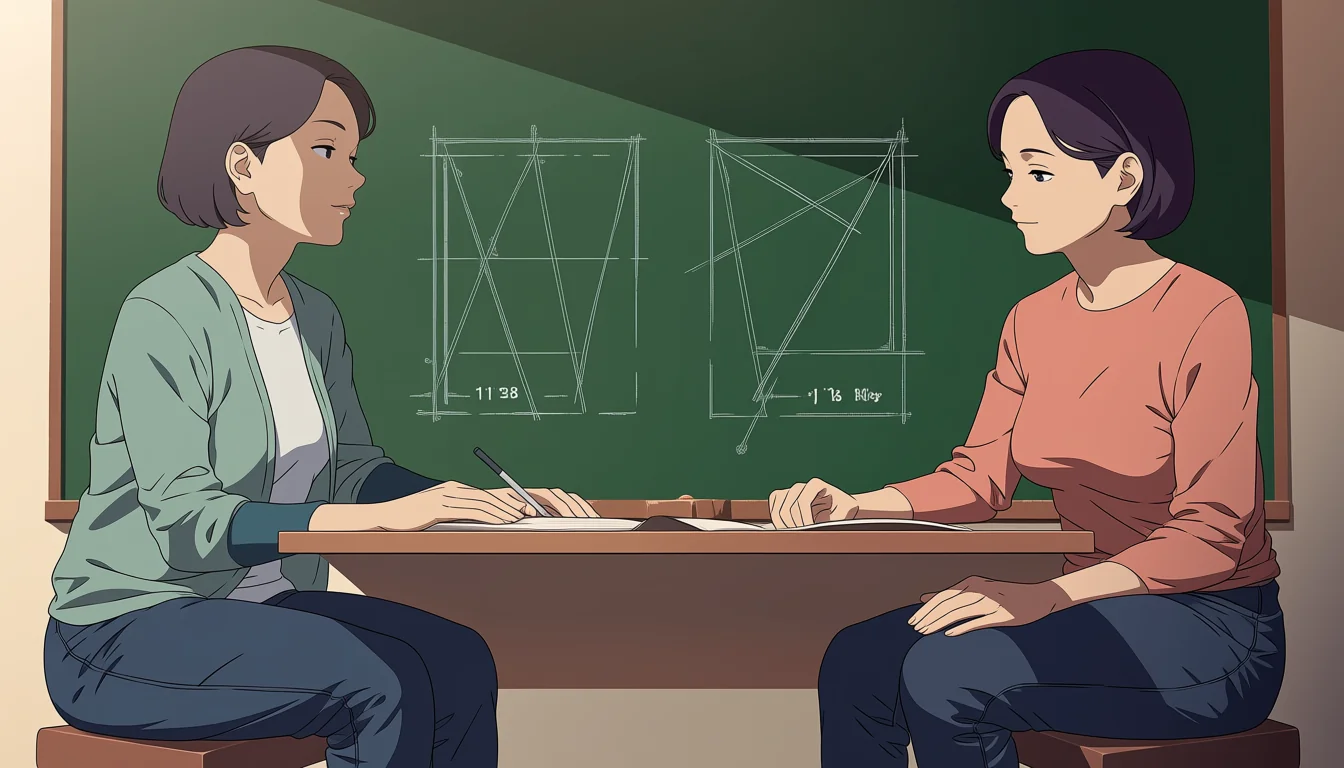
A reader deciding whether to continue makes that decision very fast, usually on the first image and before reading a word. That is not laziness; it is what anybody does faced with more material than time. An opening therefore has a small window and three jobs to do inside it, and most openings attempt only one.
The three are: locate the reader, give them a reason to be interested, and promise what kind of work this is. Openings that do all three are noticeably rare, and openings that do none are extremely common.
Locating the reader
Where are we, who is here, and roughly when. A reader who cannot answer these is spending attention on orientation rather than on the story, and orientation is not enjoyable. This can be done in one image if the image is chosen for it: a specific place with people in it, doing something recognisable.
Locating does not require explaining. A kitchen at night with two mugs and one person awake locates completely and explains nothing, which is the ideal ratio. The environment-as-information argument in the piece on solo scenes applies directly.
Giving a reason to continue
Something must be unresolved. A question, a tension, an oddity. This is the scene question described in the piece on what makes a scene, and on a first page it has to arrive almost immediately, because the reader has no accumulated investment to draw on.
It does not need to be dramatic. Somebody clearly not saying something is enough. What does not work is a page where everything is settled and pleasant, since a reader has no reason to turn it.
Promising what the work is
The opening sets expectations about tone, pace and register, and readers hold the whole work to them. An opening that is comic when the book is not, or explicit when the book is mostly not, produces the mismatch described in the piece on erotic and pornographic modes.
This is why openings should be written or drawn last, or at least revised last. Only at the end do you know what the work turned out to be, and only then can the opening promise it accurately.
The explanation trap
The commonest failure is beginning with background: who these people are, what happened previously, how the world works. This feels responsible and it is the least engaging material available, and readers rarely retain it because they have no reason to care yet.
The reliable alternative is to start in a situation and let the background arrive as it becomes necessary. Readers tolerate confusion far better than boredom, and a question held for ten pages is an asset rather than a problem.
The first image carries most
Since the decision is often made before reading, the first image is doing more work than any other in the book. It deserves disproportionate attention: composition, clarity at small size, and a subject that locates and intrigues at once.
It is also the image most likely to be used as a thumbnail, a cover, or a share, which means it will be seen by many people who never see anything else. That practical fact argues for spending more on it than on any other single page.
Openings for serialised work
Serialised chapters each need their own small version of this, since readers arrive after a gap and some arrive for the first time. That produces the re-establishment problem described in the piece on collected volumes, and the same solution applies: locate visually rather than in text.
A recurring opening pattern also helps, since readers learn it and orient faster. Consistency of structure is doing the same job as consistency of vocabulary elsewhere in these notes.
Building an opening that does all three jobs
Locate the reader in one image, put something unresolved on the first page, promise the register accurately, avoid background explanation, and spend more time on the first image than feels proportionate. Then revise it once the work is finished.
Characters here are fictional and unmistakably adult from the first page, as set out in the reader agreement.