
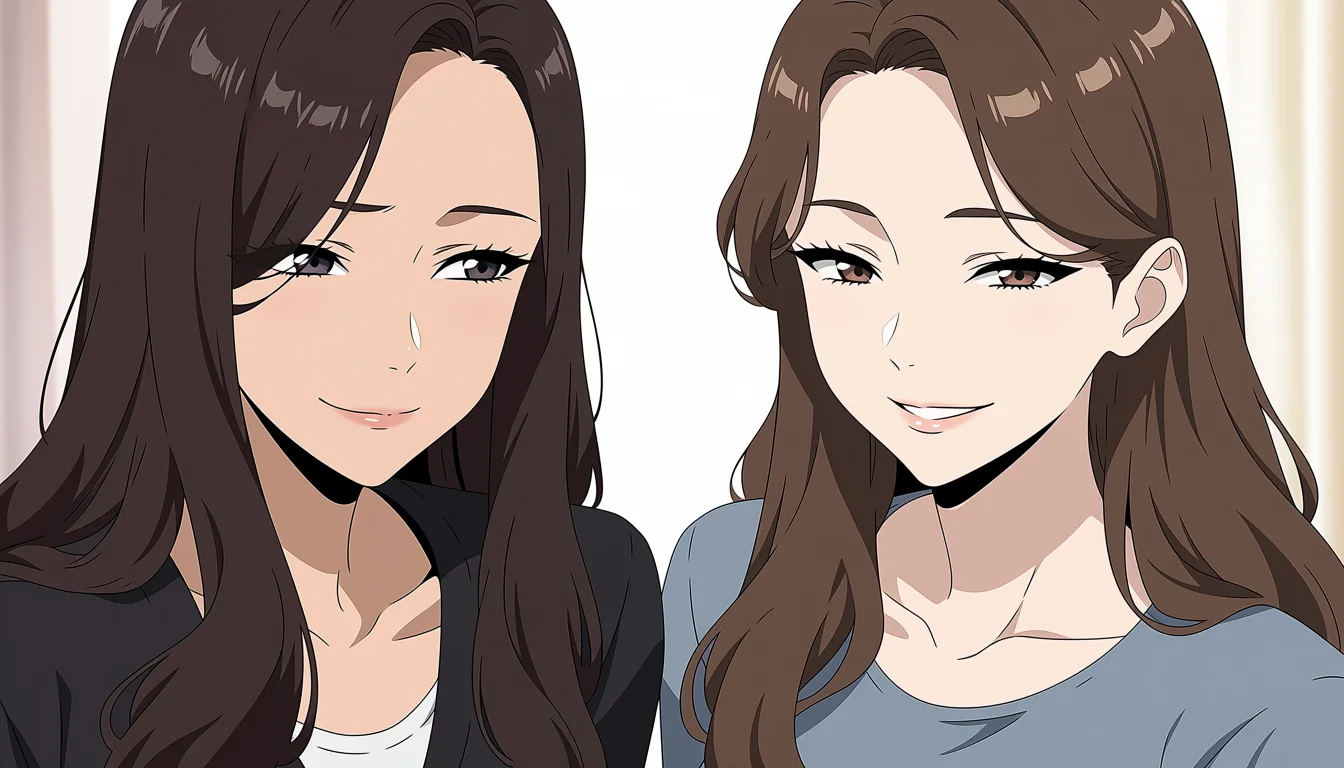
A frequent and frustrating problem in figure work is that two anatomically sound figures, correctly overlapped, still look as though they have been pasted into the same picture rather than touching each other. The drawing is not wrong in any way that can be pointed at, and it is nevertheless unconvincing. The reason is almost always missing contact information.
Contact is not proximity. It is a set of visible consequences: things deform, weight transfers, light behaves differently in the gap, and both figures adjust to each other. Any of those missing is enough to break the illusion, and all of them are cheap to add once you know to look.
Deformation happens on both sides
When a hand rests on a shoulder, the hand flattens slightly and the shoulder gives. Beginners draw one or the other, and often neither. Both sides deforming is what says these are two soft objects in contact rather than one solid object intersecting another, and it takes a very small amount of drawing to communicate.
The amount matters. Too little reads as hovering; too much reads as pressing hard, which is a different statement about the scene. Choosing the amount deliberately is part of the choreography discussed in the piece on visible consent, where degrees of pressure carry meaning.
Weight has to go somewhere
If one figure is supported by another, trace the chain: which part carries the load, what carries that, and where it eventually reaches the ground or the furniture. A figure leaning on somebody who is not braced for it is a drawing of two people about to fall over, and readers sense the instability even when they cannot name it.
Bracing is visible. A supporting figure widens her base, shifts weight onto one leg, and tenses somewhere. Drawing that response is what makes the support believable, and it is the still-image version of the settle described in the piece on weight in animation.
Light in the gap
Where two forms come close, the light between them is progressively blocked, producing a soft dark band that gets darker and tighter as the gap closes. That gradient is one of the strongest contact cues available and it is regularly omitted, leaving two figures that touch but do not shadow each other.
There is a corresponding effect on the other side, where light bouncing off one figure warms the other. Both are subtle, both are quick, and together they do more to unify two figures than anything else in the rendering stage. The scattering behaviour behind this is covered in the piece on skin translucency.
Shared light ties figures together
Two figures lit by different setups will never look like they occupy the same room, however carefully they are drawn. The direction, colour and hardness of light must match, and the shadows they cast must be consistent with a single source arrangement. This is the still equivalent of the point made in the piece on lighting two people.
The check is to look at the shadow directions alone, ignoring everything else. If one figure's shadows imply a light on the left and the other's imply the right, no amount of contact detail will rescue the image, because the underlying claim about the space is contradictory.
Mutual adjustment
People in contact adjust to each other continuously: a shoulder drops to make room, a hand finds a stable position, a leg moves out of the way. Drawing both figures in poses that were designed independently produces the specific stiffness of two mannequins arranged near each other.
The fix is to pose them together from the beginning, in a rough sketch, and to let each one be slightly compromised by the other. That compromise is what reads as a relationship rather than an arrangement, and it is worth more than any amount of finish added afterwards.
Making contact look like contact
The list: deform both sides, trace the weight to the ground, put a soft occlusion shadow in the gap, add a little bounce light, match the lighting between figures, and pose them together rather than separately. Six checks, all quick, and together they solve the great majority of contact problems.
Characters here are fictional and unmistakably adult, as set out in the reader agreement.