
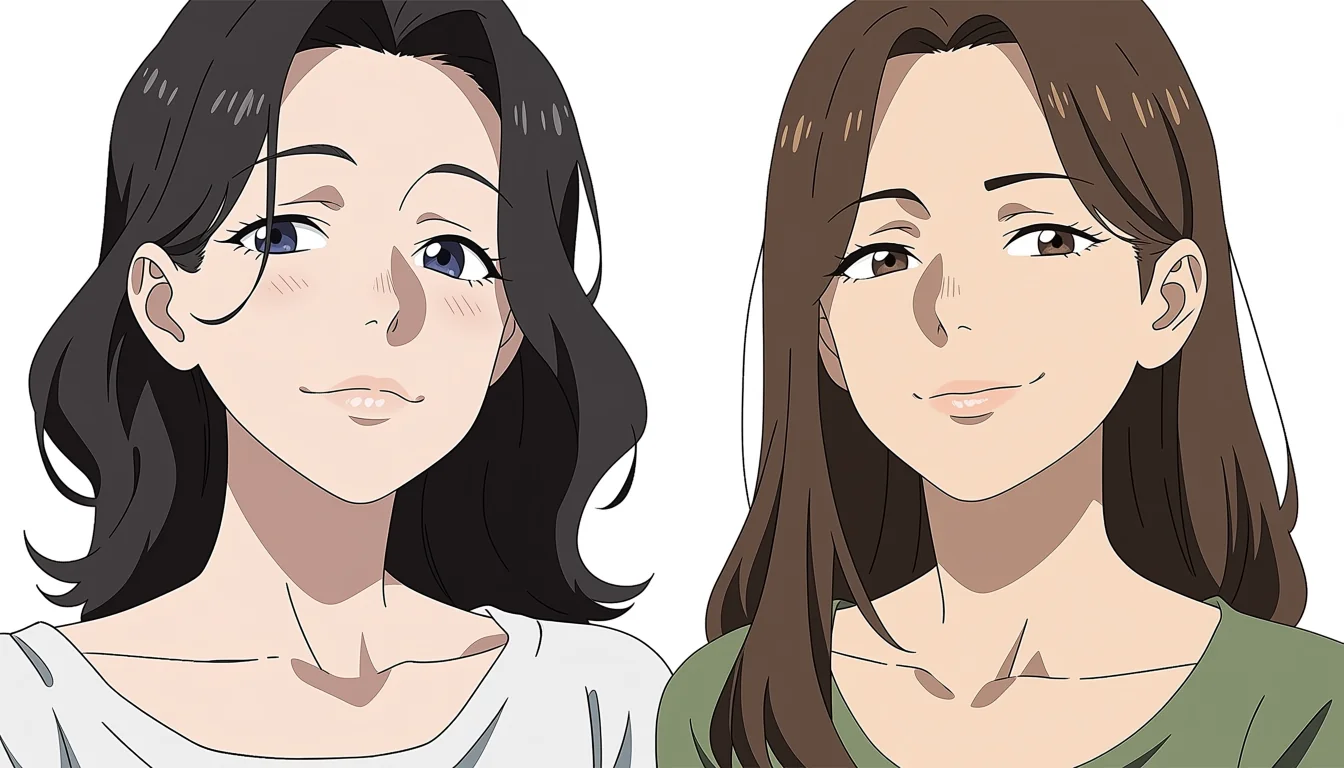
Animated drawn work looks like it should compress well. Large flat areas, few textures, simple shapes. In practice it is close to the worst case for most video codecs, and the characteristic damage is easy to recognise once you know what to look for. Understanding why prevents a great deal of avoidable quality loss.
The problem is that video compression was designed around photographic footage, where noise, texture and gradual gradients hide errors. Drawn work has none of those, so every error is visible against a clean background, which is exactly where the eye is most sensitive.
Why flat areas band
A gentle gradient across a large flat area is stored with limited precision, and the result is banding: visible steps where there should be a smooth transition. On a photograph, film grain and texture break the bands up. On a flat drawn sky or a soft-lit wall there is nothing to break them, so they appear as distinct stripes.
The standard remedy is a very small amount of dither or noise added before encoding, which gives the codec something to hide the steps in. It feels wrong to degrade an image on purpose and it reliably produces a better result at normal viewing distance.
Why edges turn to mush
Hard black lines against flat colour are high-frequency information, which is the first thing a codec discards when the bitrate is tight. The line acquires a halo, thin lines break up, and the whole image loses the crispness that was the point of drawing it that way.
Higher bitrate is the direct fix, and there is a cheaper one: avoid unnecessary movement. Codecs spend most of their budget on change between frames, so a static background with only characters moving costs far less than a constantly drifting camera. That is a compositional decision with a technical payoff.
Frame rate against resolution
With a fixed bitrate, more frames means less data per frame. Drawn animation frequently runs on twos or threes, meaning fewer distinct images per second, and it can therefore afford higher resolution than live action at the same bitrate. Deciding this deliberately is better than accepting whatever an export preset does.
For most drawn work, sharper images at a lower frame rate look better than soft images at a high one, because the style already implies stepped motion. This is the same argument as the holds discussion in the piece on holds: fewer, better-chosen frames beat more mediocre ones.
Grade for the delivery format
Work graded on a bright calibrated monitor and delivered to phones viewed in daylight will lose its shadow detail entirely. Deep, subtle darks are the first casualty of both compression and viewing conditions, so a grade that relies on them is a grade that most viewers will never see.
Check the final encode on an actual phone, at ordinary brightness, before signing off. That single check catches more problems than any amount of adjustment on a good display, and it is the delivery-side version of the small-size testing recommended in the piece on rendering for a page.
Archive differently from delivery
Keep a master in a high-quality or lossless format and treat every delivery encode as disposable. Re-encoding an already compressed file compounds the damage, so future versions should always come from the master rather than from last year's upload.
This is the animation-specific case of the archiving practice described in the piece on keeping your own archive, and it matters more here because the delivery file is so much further from the original than a compressed still is.
Colour space is the quiet trap in all of this. Work produced in a wide gamut and delivered without conversion arrives on most screens with its saturation shifted, usually toward the dull side, and the artist blames the platform for something the export settings did. Converting deliberately, and checking the result rather than assuming it, removes a problem that otherwise appears at the very last stage of a long project.
Getting drawn animation to survive delivery
In summary: add a little dither, keep backgrounds still where you can, prefer resolution over frame rate, grade for phones, and always re-encode from a lossless master. None of this is difficult and all of it is regularly skipped in the rush to publish.
Characters here stay fictional and unmistakably adult, as set out in the reader agreement.