
Readers talk about chemistry as though it were weather: a scene has it or it does not, and nothing can be done. That is not much use to somebody trying to write one. In practice the effect is produced by a small number of choices that can be listed, checked and revised, and scenes that lack it are usually missing one of them specifically.
This applies to drawn work as much as to prose, because most of the ingredients are visual: where people look, how close they stand, what they do with their hands, and what the composition places between them. The list below is not exhaustive, but it covers most of what is missing when a scene falls flat.
Attention that is returned
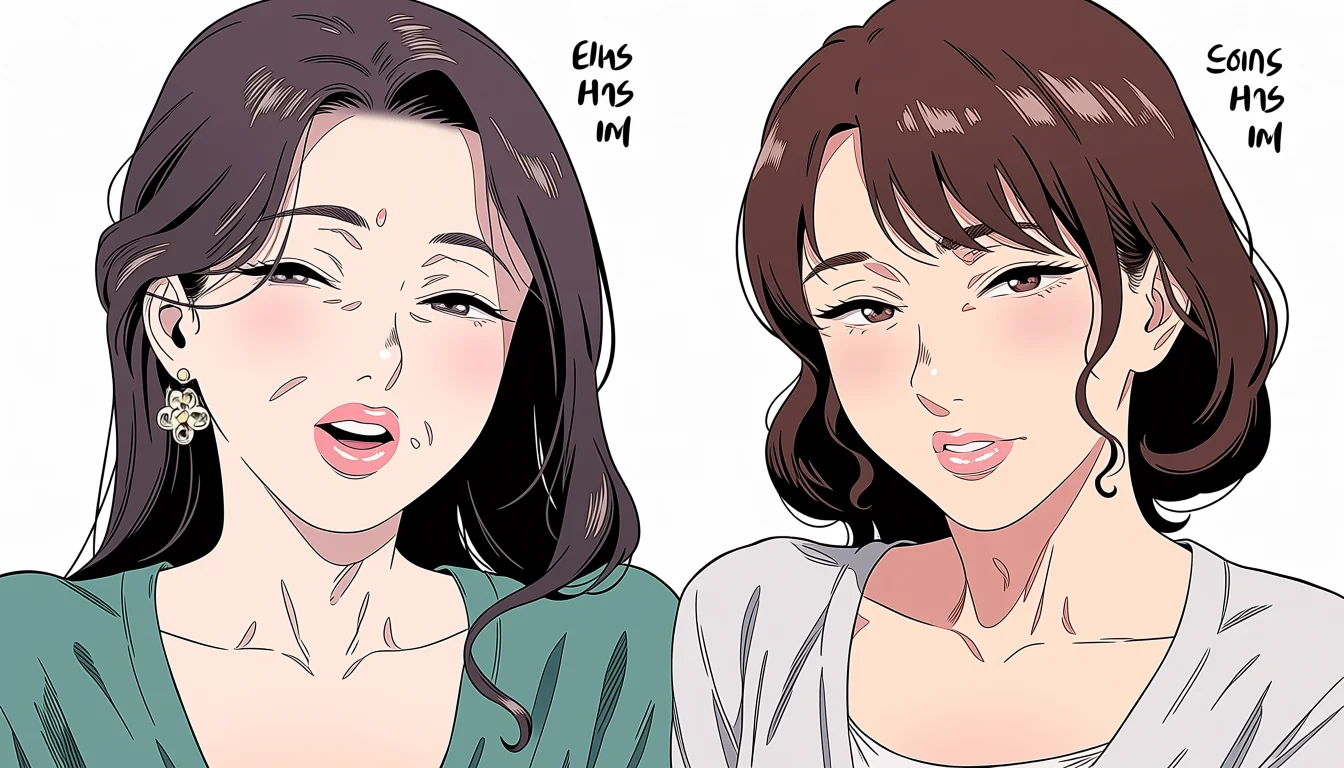
The base ingredient is mutual noticing. One character looks and the other registers being looked at. This can be entirely silent and it can happen in a single panel, and without it no amount of physical proximity produces anything. Two people close together who are not attending to each other read as two people who happen to be in the same photograph.
The returned part matters more than the initial look. One-sided attention is a different scene: it is longing, or predation, or comedy, depending on framing. Chemistry specifically requires the loop to close, and closing it visibly is the cheapest available fix for a flat scene.
Asymmetry keeps it moving
If both characters want exactly the same thing at exactly the same intensity, the scene resolves immediately and there is nothing to watch. A small imbalance gives it somewhere to go. One is readier than the other; one has decided and one has not; one knows something. This is the same engine described in the piece on writing two-handers.
The imbalance should also move. A scene where the same person is always ahead becomes static in a different way, and it tends to read as one character acting upon another rather than as two people meeting. Letting the lead change hands is what produces the sense of an exchange.
An obstacle converts attraction into tension
Attraction on its own is pleasant and inert. Something in the way turns it into tension, and tension is what readers experience as heat. The obstacle can be tiny and external, like a room with other people in it, or internal, like one character not yet admitting something to herself. It only has to be real enough to delay.
Removing every obstacle is the most common cause of scenes that are explicit and somehow uninvolving. Everything is available and nothing is at stake, so the reader watches events rather than following a situation. That is the structural version of the pacing problem described in the piece on pacing an intimate sequence.
The gap between said and done
Most of the pleasure in a well-built scene comes from the distance between what characters say and what they are visibly doing. A line about something unimportant, delivered while somebody is standing considerably closer than the conversation requires, carries more than a direct statement ever will.
For a drawn medium this is a gift, because the two channels are genuinely separate. The dialogue can be flat and ordinary while the drawing does the other work, and readers integrate the two automatically. Writers who make the dialogue carry everything usually end up with characters explaining their feelings, which kills the effect immediately.
Physical business beats description
Hands are the most efficient carrier: what they touch, what they avoid, whether they are still. Then proximity, then the direction of a body relative to another. All of these can be adjusted without changing a word, and all of them read faster than any description does. The drawing side of this is covered in the piece on hands.
Business also gives a scene texture and keeps it from becoming two heads talking. A character doing something ordinary while a conversation happens around it makes the whole exchange feel like part of a life rather than a set piece staged for the reader.
Assembling chemistry deliberately
The checklist is short: mutual attention, an asymmetry that moves, an obstacle, a gap between said and done, and physical business. If a scene is not working, one of those is usually missing entirely rather than all of them being slightly weak, which makes the diagnosis quicker than it sounds.
Characters here are fictional and unmistakably adult, and consent stays legible in the staging as described in the choreography piece.