
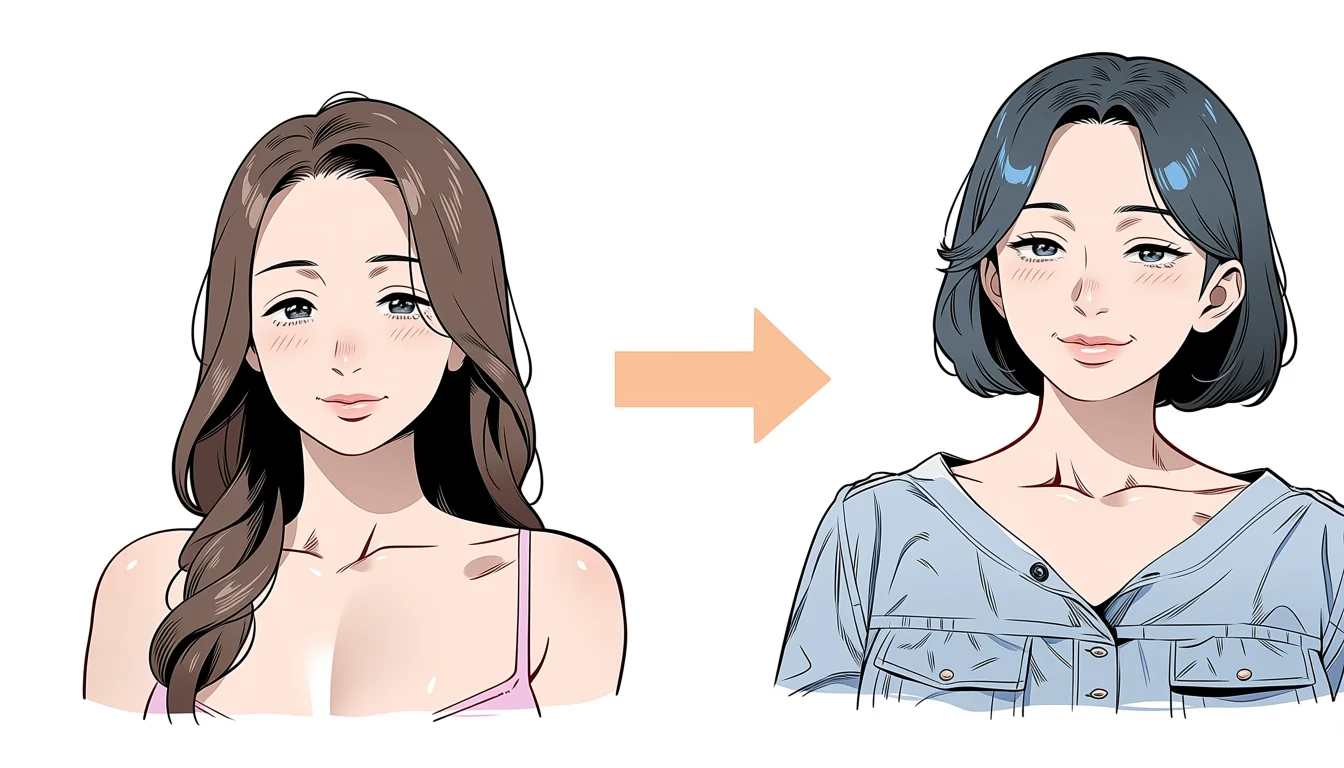
People treat tags as descriptions, as if the job were to say accurately what is in a work. That is only half of it. A tag is mostly a routing instruction: it decides which filters catch the work, which default views exclude it, and which readers will ever have the chance to decide for themselves. Accuracy is necessary but it is not what tags are for.
This matters most for explicit labels, because those are the ones platforms act on automatically. Add one and a work can vanish from search suggestions, recommendation feeds, and every logged-out browse page in a single step, without any human decision anywhere in the chain. Leave it off and the work reaches people who did not agree to see it.
What a filter actually does
Most platforms run a default exclusion list. Anything carrying a tag on that list is removed from browse pages unless a reader has explicitly turned it on in settings, and settings are changed by a small minority of any audience. So the practical effect of an excluded tag is not a warning; it is near-invisibility to everybody except readers who went looking.
There is usually a second layer as well. Search engines and app stores apply their own rules to page text, and a tag rendered visibly on a page can trigger them even when the host platform is comfortable. This is why identical content sometimes performs completely differently depending on where the tag lives in the markup.
Under-tagging is a consent problem
The temptation is obvious. Leave the tag off, reach more people, get more attention. What that actually does is remove the reader's ability to choose. Somebody who filtered a category out did so for a reason, and defeating their filter is not clever marketing, it is a small breach of an agreement the platform made on their behalf.
It also damages the artist. Readers who encounter something they had excluded do not blame the tagging system; they block the account. Reach bought this way converts badly and costs the audience that would have opted in willingly. The short-term arithmetic looks good and the long-term arithmetic almost never does.
Over-tagging has its own cost
The opposite failure is padding the tag list with everything vaguely applicable, either to catch more searches or out of caution. That dilutes the signal. Readers who use tags to find things learn quickly that a given artist's tags mean nothing, and filters that were meant to protect them start catching work that never needed catching.
Some platforms also penalise it directly, treating long tag lists as spam signals. The healthier standard is to tag what a reader would want to know before opening the work, and nothing else. If you would not mention it in a one-sentence description, it probably does not belong in the list.
Consistency across a body of work
The most useful thing an artist can do is tag the same way every time. A reader who follows you learns what your labels mean, and that shared vocabulary is worth more than any individual tag's reach. Inconsistent tagging destroys it, because nobody can build expectations on a system that changes from post to post.
Keep a written list of the tags you use and what each means to you. It takes ten minutes and it removes the recurring decision entirely. It also makes bulk edits possible later, when a platform changes its vocabulary and you need to remap an archive of several hundred works without re-reading all of them.
Treating a tag as a routing decision
So the working question is not what is in this picture but who should meet this picture and who should be able to avoid it. Answer that honestly and the tag list writes itself, including the explicit labels that will cost visibility. Accepting that cost is part of doing the work responsibly rather than an unfortunate side effect.
Every work here involves fictional, unmistakably adult characters, and the categories we will not publish are listed in the reader agreement. Attribution and metadata questions are covered in the piece on artist credit, and platform tag vocabularies live on explore page 3 rather than here. Editorial reasoning is in our principles page.