
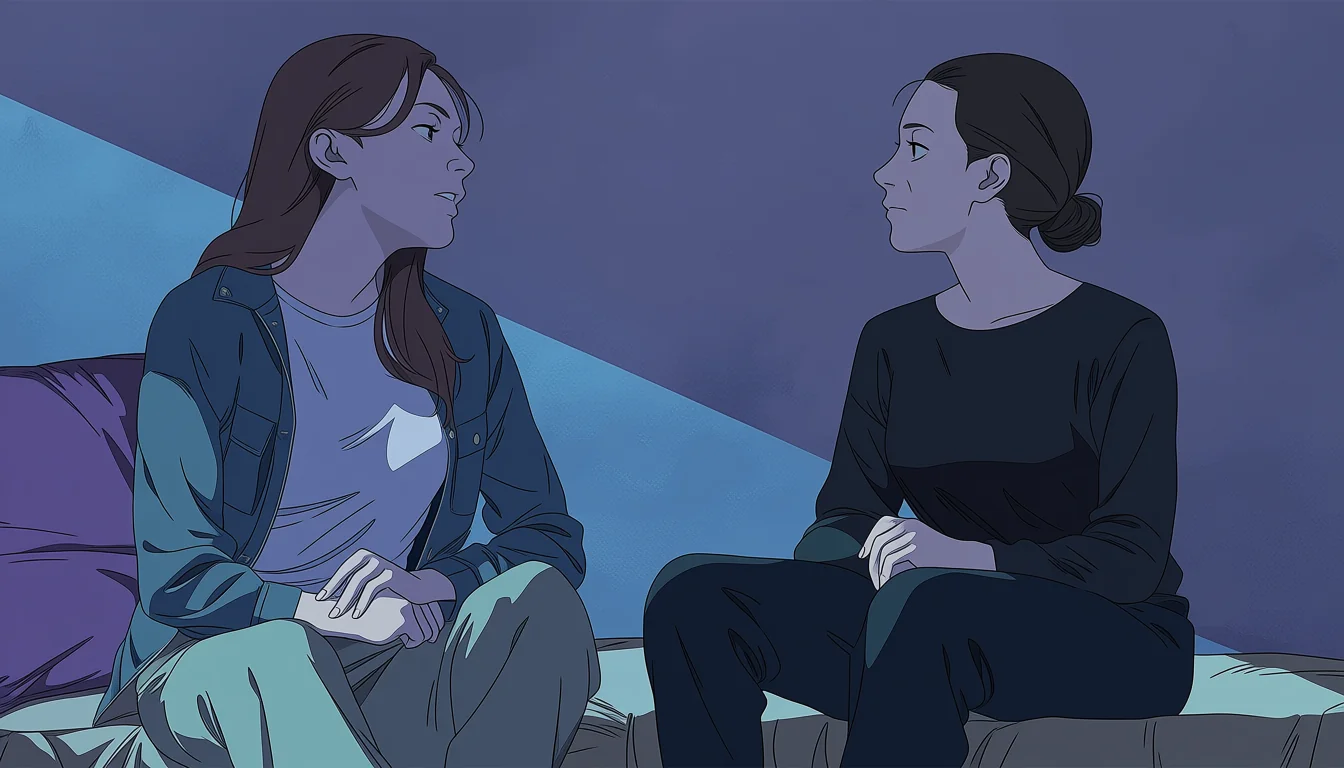
The phrase Henti Lesbian Sex can point to several different reader needs: a format, a drawing style, a search habit, or a question about representation. This page treats it as an editorial subject, not as a request for graphic material. Our focus is how queer adult illustration is made, credited, read, and kept within firm consent and age boundaries. Every character discussed here is fictional and unmistakably adult. That rule applies even when a search phrase is vague, misspelled, or inherited from an older web address.
Read the query before the image
A query such as Henti Lesbian Sex may be a typo, a compressed tag, or an old site label. Search systems often group it with nearby terms, but that does not make the results equivalent. Start by separating format words such as comic or animation from relationship words such as yuri or lesbian, then note any age or consent concern.
A title can describe a medium, a mood, or a marketing habit. Read the page around it. Who is speaking? Is there a creator statement? Does the sequence have a beginning and an end? Our notes on writing two women as complete characters give a better test than counting familiar tags, because they ask what each adult woman chooses and how the scene lets you see it.
Check adult age and consent first
A useful result should state what it is, who made it, and when it was published. It should not hide the creator behind scraped thumbnails or copied captions. If a page has no author credit, no context, and no clear adult-age statement, the lack of information is itself a reason to leave rather than guess.
Age must read in the art without a hidden biography. Use mature facial structure, adult proportions, adult settings, and an established life outside the encounter. Consent must also read as an active exchange, with room to ask, pause, change direction, or stop. The agreement we share with readers states the non-negotiable line: no minors or ambiguous age, no coercion, no incest, no trafficking, and no sexual use of a real person's likeness.
Keep authorship and source context
Spelling variants can lead to cloned archives that recycle the same files. Compare the credit line, image crop, and publication date. The earliest indexed copy is not always the creator's page, but a consistent portfolio and process notes are stronger evidence than a download button surrounded by tags.
Credit is part of reading. A name, publication date, original context, and clear edit history let readers distinguish authorship from reposting. Keep signatures intact and do not present a gallery, generation service, or edit tool as if this journal owns it. The people and principles behind this journal explain why we publish criticism and craft notes while creation and private account work remain with the platform that supplies those services and safeguards.
Read composition, colour, and sequence
Treat the search phrase as the start of a question, not as an answer. The best next step is often a credited essay, an artist statement, or an original adult character study rather than a larger pile of disconnected images.
Look at value before hue. Squint at the image and note which shapes survive. Then trace the eye line, hand gestures, panel order, or camera movement. Colour should support that structure and set a relationship between moments. The guide to a palette for tenderness that is not all pink shows how contrast, temperature, and repeated accents can carry closeness without turning queer intimacy into a single colour code.
Use a practical reader checklist
Use the same short check each time. It slows a snap reaction just enough to reveal what the work is doing and what information is missing.
| Check | Question | Good evidence |
|---|---|---|
| Adults | Does every figure read as an adult? | Mature design and adult context |
| Agency | Can each woman choose and stop? | Visible response and check-ins |
| Source | Who made and published it? | Credit, date, and original page |
| Craft | What directs the eye? | Staging, value, colour, and sequence |
| Rights | Is the work original and permitted? | No tracing, theft, or real-person imitation |
After the check, write one sentence about the work's actual choice. For example: the cool background holds still while a warm hand gesture changes the balance of the frame. That is more useful than saying an image is simply good or hot. If you want to make a new study from the lesson, start with an original scene rather than copying the pose, character, or surface finish of the source.
What “Henti Lesbian Sex” means in adult-art search
Return to Henti Lesbian Sex with the checklist in view. The query now has a clear editorial answer: verify adult age and free consent, name the author, keep the original context, study the visual decisions, and reject any result built on ambiguity or harm. These steps do not flatten taste. They create enough structure for taste to become a reasoned response rather than an impulse shaped by a tag.
A good page leaves you able to describe why a scene works and where its ethical limits sit. It should also make the next action plain. Read more about character, light, or pacing; make an original adult study; or close a source that cannot meet the basic checks. Queer visual intimacy deserves that level of attention because the women in it should read as people with histories, preferences, and the power to choose.